How to Improve Garden Soil Naturally
Good soil grows good gardens. Here is how to build healthy, living soil with compost, mulch, cover crops, and a no-till approach.
Good soil grows good gardens. You can water, weed, and fuss, but if your soil is poor, your harvest will be too. The good news: soil improves every year you work it. Here is how to build it naturally.
Start with a test
Before adding anything, find out what your soil needs. A basic home test kit or a lab test through your local extension office tells you pH and nutrient levels. Guessing wastes money and can make things worse.
Add compost, always
Compost is the single best thing you can do for your soil. It improves sandy soil's ability to hold water and opens up heavy clay so roots can breathe. Spread an inch of finished compost on beds each spring and fall. You cannot overdo it.
Make your own compost
A simple pile of kitchen scraps, leaves, and garden waste becomes black gold in six to twelve months. Keep it damp, turn it occasionally, and aim for a mix of 'greens' (kitchen scraps, grass) and 'browns' (leaves, straw, paper).
Grow cover crops
Bare soil erodes and loses life. A cover crop of clover, vetch, or rye protects the soil over winter and adds organic matter when you turn it under in spring. Legumes like clover even fix nitrogen from the air into the soil.
Use mulch
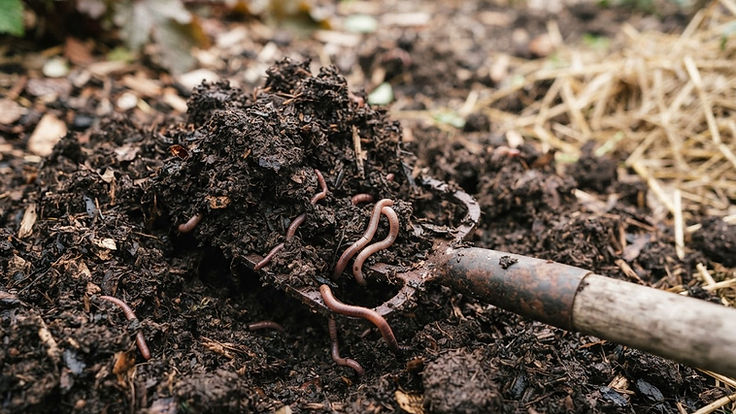
A layer of straw, leaves, or grass clippings on top of the soil keeps it moist, cool, and weed-free. As the mulch breaks down, it feeds the soil life. Earthworms thrive under mulch and aerate the soil for you.
Minimize tilling
Every deep tilling breaks up the soil structure and the fungal networks that feed plants. Instead of turning the soil over, add compost to the top and let the worms work it in. No-till beds improve year after year.
Feed the life, not the plant
Healthy soil is alive — a single teaspoon holds billions of organisms. When you feed the soil with compost and mulch, you feed this web of life, and it feeds your plants in return. This is the difference between soil that lasts and soil that depends on a bag of fertilizer.
Improving soil is slow work, but it compounds. Every season, the ground under your hands gets a little richer.