Growing Tomatoes in a Backyard Garden
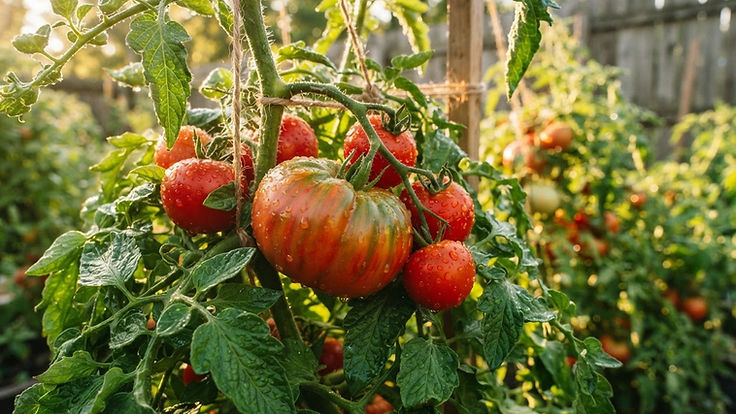
A practical guide to growing tomatoes at home — choosing varieties, planting deep, supporting, watering, and avoiding common troubles.
Nothing from the garden tastes quite like a sun-warm tomato eaten over the sink. Tomatoes are generous plants for a beginner — give them sun, water, and support and they will reward you.
Choose your type
- Determinate varieties grow to a fixed size and ripen all at once — good for canning and small spaces.
- Indeterminate varieties vine and keep producing until frost — good for a steady table harvest.
For flavor, try an heirloom like Brandywine or Cherokee Purple alongside a reliable hybrid like Early Girl for insurance.
Start with strong plants
You can start tomatoes from seed six weeks before your last frost, or buy transplants. Either way, look for stocky plants with deep green leaves, no flowers yet, and no leggy stems.
Plant deep
Tomatoes grow roots along their stem. Pinch off the lowest leaves and bury the stem two-thirds deep at planting. A deeper root system means a sturdier, more drought-tolerant plant.
Give them support
Indeterminate tomatoes need tall support. Set a stake or cage at planting time — waiting until the plant is large means you will damage roots. Tie the vine loosely as it grows.
Water consistently
Inconsistent watering causes blossom-end rot and cracked fruit. Aim for a deep, steady soak — about an inch a week — and water at the base, not the leaves, to keep disease down. Mulch helps hold the moisture.
Feed moderately
Too much nitrogen gives you a huge green plant and few tomatoes. Work in compost at planting and side-dress with a balanced fertilizer once the first fruits set.
Prune for air
On indeterminate plants, pinch the 'suckers' — the small shoots that grow between the main stem and branches. Removing the lower ones keeps air moving through the plant and reduces disease.
Watch for the usual troubles
Blossom-end rot (a dark patch on the bottom) signals calcium stress, usually from uneven water. Early blight shows as lower leaves yellowing and spotting — remove affected leaves and mulch to keep soil off the plant.
Pick tomatoes when they give slightly to the touch and are full-colored. Then stand over the sink and enjoy the reward for all of it.